
THERE ARE MANY PATHS TO HEALING
Community Impact Micro Fund
By investing in restorative approaches, we’re expanding what’s possible—creating space for accountability, connection and community-led solutions. A different way forward.
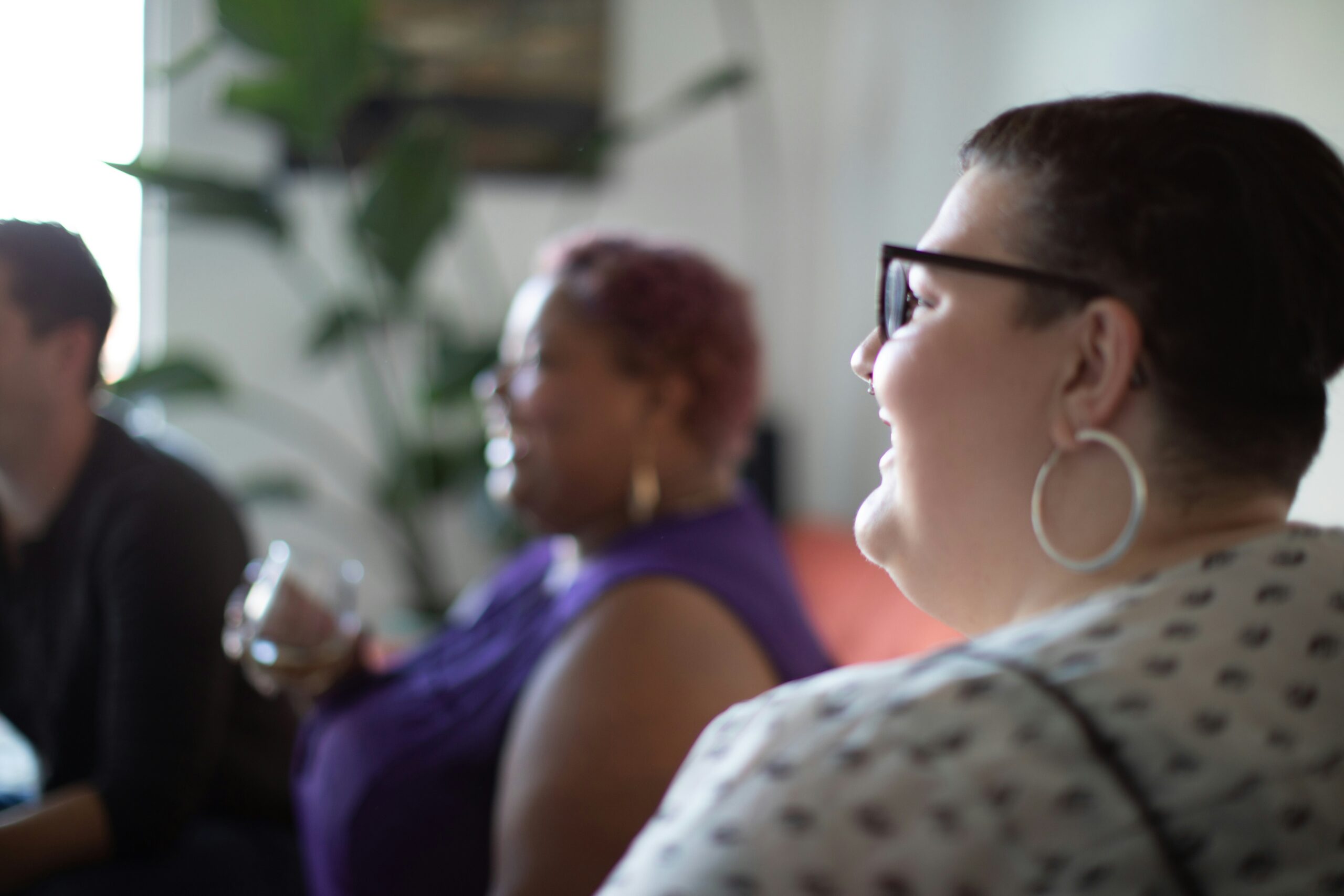


Centering Survivor Choice
Survivors of gender-based violence—including intimate partner violence, sexual violence, stalking and trafficking—are best suited to determine their own path to healing.
While some choose to engage with the criminal legal system, others do not. Restorative practices offer an additional option for those who want to prioritize healing, dialogue and personal empowerment in their recovery journey.
Investing in Restorative Practices
Restorative practices are a way of responding to harm or wrongdoing that focuses on repair rather than simply punishing the person who caused harm. Restorative approaches center the survivor’s needs—allowing them to express the impact of the harm, ask questions, and, in some cases, receive acknowledgment or accountability from the person who caused it.
The goal is accountability, healing, and understanding, rather than just assigning blame or punishment. Restorative approaches look different in different communities and contexts and can also include efforts to prevent and break cycles of harm.
Why This Work Matters
The Women’s Fund partnered with researchers and local community members to collaboratively explore approaches to addressing gender-based violence.
We are seeking partners in our community interested in continuing to explore how to increase the availability and knowledge of restorative approaches to addressing gender-based violence. Our first step is to offer funding to partners who want to take this next step with us.
What This Funding Can Support
These grants are intended to support immediate community needs for education, critical conversations, networking and basic operations for emerging or smaller-scale restorative initiatives. Examples of possible activities include but are not limited to:
Education & Learning
Introductory or advanced learning on restorative practices
Community Engagement
Building relationships, partnerships and readiness
Restorative Projects
Small-scale initiatives that prevent or address harm
Consultation & Start-Up Support
Guidance to launch or strengthen initiatives
Training & Knowledge Sharing
Cross-training, coaching and mentorship—especially across BIPOC communities and white practitioners/allies
FREQUENTLY ASKED QUESTIONS
Listening to and centering the needs of survivors is critical to addressing gender-based violence, and we have learned through listening and research that many survivors desire options outside the traditional criminal legal system for healing, repair, accountability and prevention. The aim of this micro funding is to allow those who are deeply rooted in their communities to experiment with and grow these options in ways that make the most sense for them.
Only nonprofit organizations with a 501(c)3 exempt status or organizations who are fiscally sponsored by an organization with 501(c)3 exempt status are eligible for this round of funding. Women’s Fund is especially interested in engaging with organizations who do not yet have a funding relationship with us, though current grantees are also welcome to apply.
Small and grassroots organizations are encouraged to apply. Black, Indigenous and People of Color (BIPOC) led organizations, organizations led by LGBTQIA2S+ individuals, multi-lingual agencies, refugee, immigrant, and asylum-seeking led organizations, and/or organizations led and/or staffed by people directly impacted by gender-based violence are also encouraged to apply. Applications for funding in 2026 have closed.
While the funding is intended to support healing and repair for survivors of gender-based violence, we recognize that whether or not to identify as a survivor is personal to each individual. We are asking applicants to center the needs of survivors of gender-based violence in their project design, but are not asking them to verify that all participants or beneficiaries have lived experience.
Funding will start at $1,000 and can possibly go up to $10,000. At this point, it is one-time funding.
Apply online between May 1 and May 31. Please note that one of the questions within the application requires you to upload a budget document for this funding in PDF, DOC, DOCX, PNG, JPG, or JPEG format. If you have a preferred budget format, please feel free to use it. If you would prefer to have a template, you can use the one we have created. Download here.
Your budget helps us better understand the financial needs of the work you’re proposing, which will help us distribute the funds we have available for this work to multiple organizations. Especially with new, more experimental work, we understand your financial needs may shift and what you submit may represent an estimate. We will not ask you to track your expenses.
You are expected to attend a kick–off meeting with other funded organizations, start working on your proposed project during the grant period, and attend a close out meeting in early 2027. The closeout meeting will include a process where organizations reflect on their work and surface learnings, which will be documented and used as final project reporting instead of a written document. While we expect projects to start within six months of receiving funding, all funding does not need to spent by the close out meeting.
The Women’s Fund has available resources and educational materials that we are happy to share with you as we learn together. We are truly considering this a pilot project and will lean on shared learning for future iterations of this work and how we will grow it collectively.
Funding decisions will be made and all applicants will be informed of their funding status by June 16. An upfront, one-time payment via check for the awarded amount will be made once organizations review and sign a funding agreement provided by the Women’s Fund.
Projects should center the needs of survivors of gender-based violence, but it’s not necessary to verify that all project participants identify as a survivor. We do not want to provide too many examples upfront as we truly want to provide as much flexibility as possible. That said, we know some ideas can be useful as a starting point or possible inspiration. In that spirit, here are some examples of projects we have read or heard about:
- Art & Expression workshop to process trauma and foster self-expression
- Community garden
- Indigenous-led peacemaking circles
- Financial wellbeing workshop to foster financial independence
- Transportation, food, room rental for group
- Nourishing community meals – shared meals paired with discussion or support circles
- Mindfulness & wellness programs – yoga, meditation, guided breathing, or movement therapy to support emotional regulation and stress reduction
- Restorative storytelling & narrative healing – survivors create personal narratives or participate in structured storytelling
- Skill-building & empowerment workshops – public speaking workshop, digital literacy, creative skills, to grow confidence and economic independence
- Native Language & Cultural Revitalization Workshop – learning or practicing ancestral language, storytelling, etc. to foster community support, connection to heritage and tradition
- Restorative justice circle process
- Training for staff to build expertise in facilitating a circle process
- Training, professional development, and policy adjustment to allow for developing reconciliation and dialogue between those who have experienced harm and those who have caused harm
Applications have closed and recipients will be notified mid-June.
If you are interested in being notified of future opportunities, please reach out to our Grants Program Manager Angie Balsarini.